3.2 Problems faced in territorial development
3.2.1 Context
If we briefly formulate our team’s understanding of the problems of socio-economic development, then we can classify it into two theses:
- “lack of long-term responsibility of managers for the results of their activities.”
- “lack of agreement among society in the desired results of its management.”
An open book on City Digital Twin would not be able to clarify how to reward the former with responsibility and how to gain consent for the latter, but it should gradually deliver answers to the questions related to the results and mechanisms applied in achieving them. They should replace the bureaucratic, expert-intuitive model of social and economic development management.
Based on maturity studies of management models, we are aware that high-precision results-based management, even when based on quantitative models, is not the pinnacle of managerial thought. But, we are confident that this is the next and inevitable stage of maturation through which the mechanisms of managing complex objects such as a state, territory, industry or city will have to go through.
The current problems faced in the development of territories and cities are caused by the existing hierarchical structures of state relations, where the federal (and further regional, municipal) center is endowed with a volume of powers to regulate the distribution of common resources that is not commensurate with the responsibility for expanding the reproduction of these resources.
In addition, the management principle of a fixed hierarchically structured regulatory and legal system is of a narrow sectoral and regional nature, which does not allow for consistency and high efficiency in terms of the overall result. Moreover, in the practice of state power, there has not been a unified mechanism (or even criteria) for the proactive assessment and monitoring of the consequences of management decisions.
The current policy of state management hinders the increase in the level of managerial culture and, as a result, the effectiveness of socio-economic development.
3.2.2 Issues
The current system has resulted in the following problems in terms of the development of territories and industries:
- lack of accounting and planning systems for socio-economic, intersectoral, interterritorial, and sectoral development
- mismatch of federal and regional Industrial, Social, Transport, and Engineering infrastructure development programs by time and purpose
Intersectoral problems:
- imbalance in the provision and availability of infrastructure facilities
- absence of criteria for assessing the planned and actual effectiveness of capital investments in public infrastructure
- imbalance in the financial position of regulated activities (housing and communal services, energy and utility services, transport)

Interindustry city problems
- Imbalance of social infrastructure and accessibility
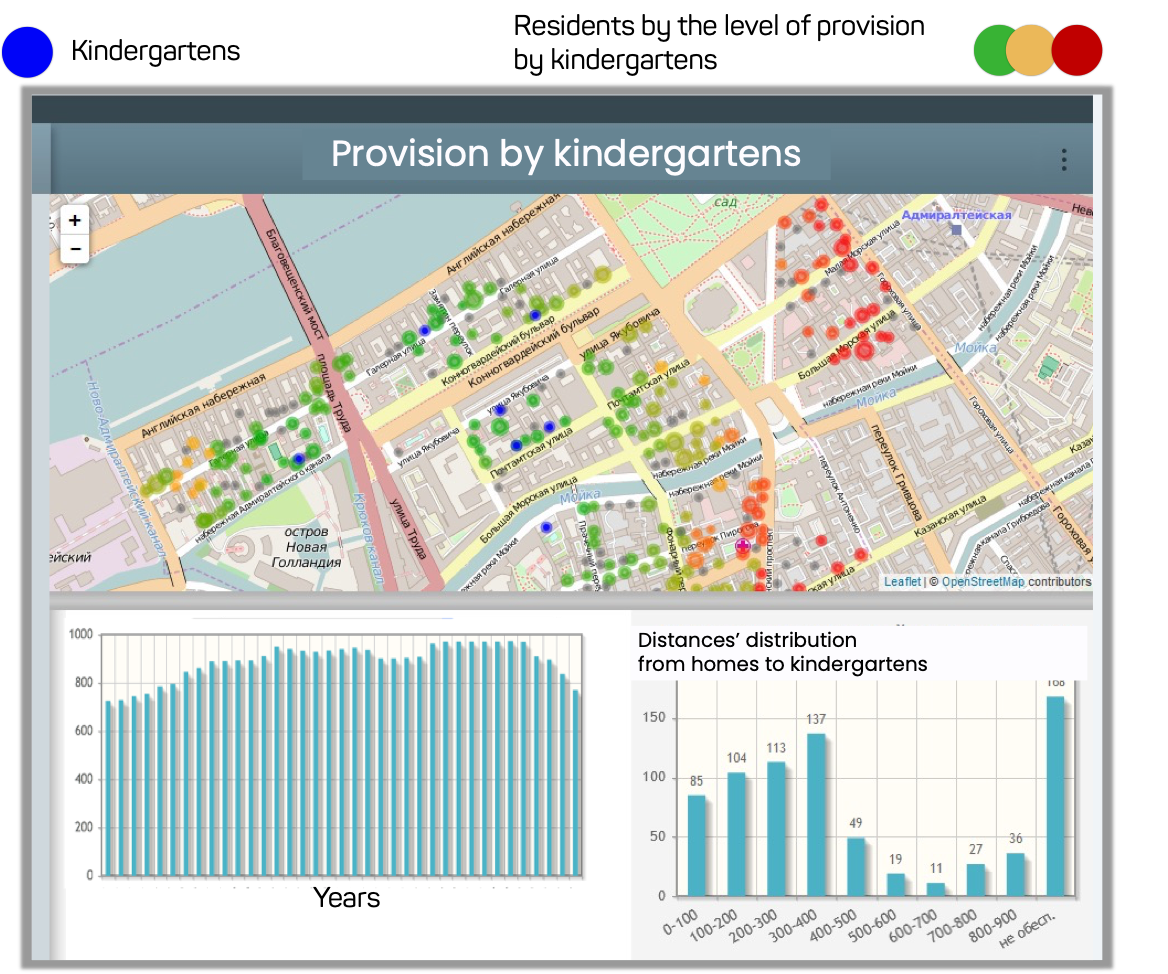
- Lack of monitoring and assessment of the technical condition of public infrastructure

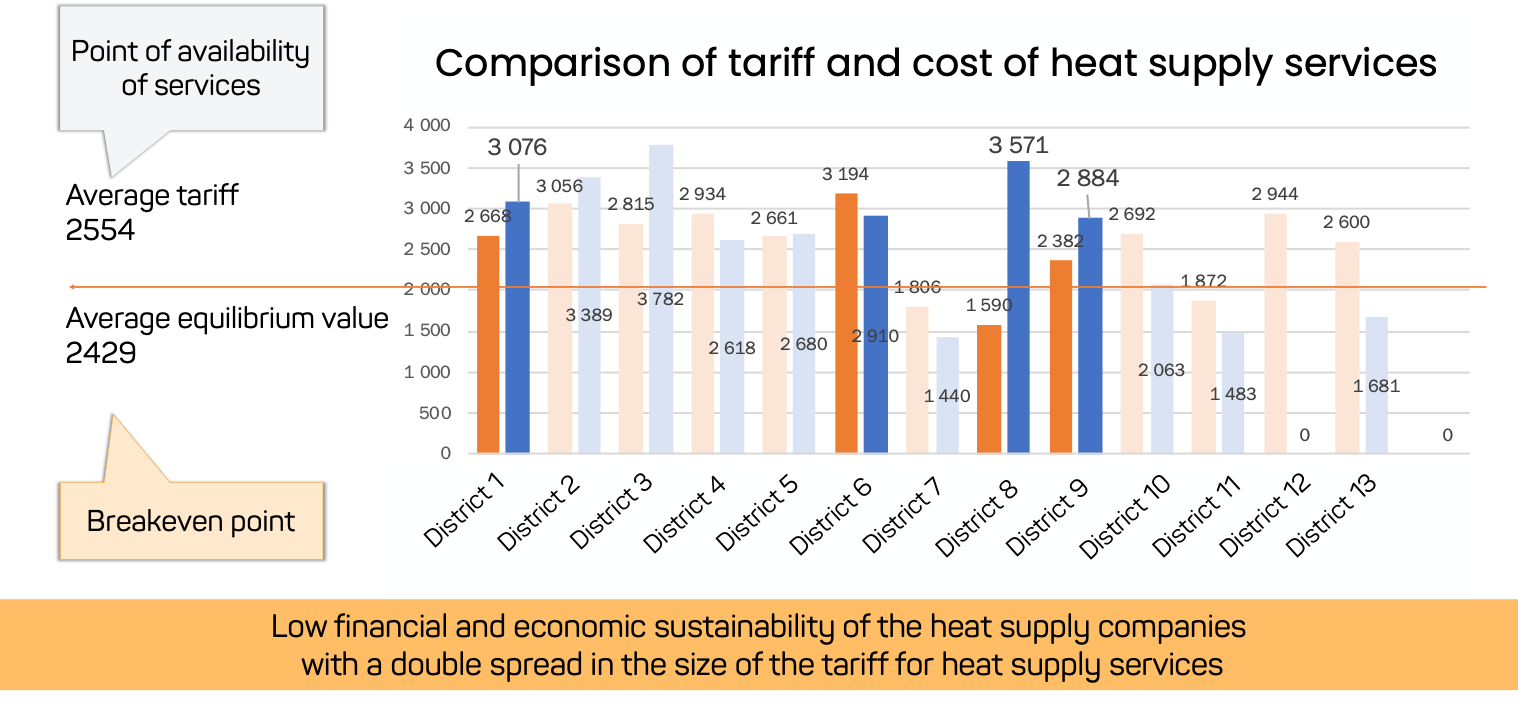
Prices for resource supply services
Prices for resource supply services:
- irregularity and insufficiency of allocated funds
- short procurement planning horizon (for one/three/six years), with a life cycle of infrastructure facilities of 20-60 years
- orientation of public procurement toward costs, not results, which leads to reduced quality and the emergence of monopolies
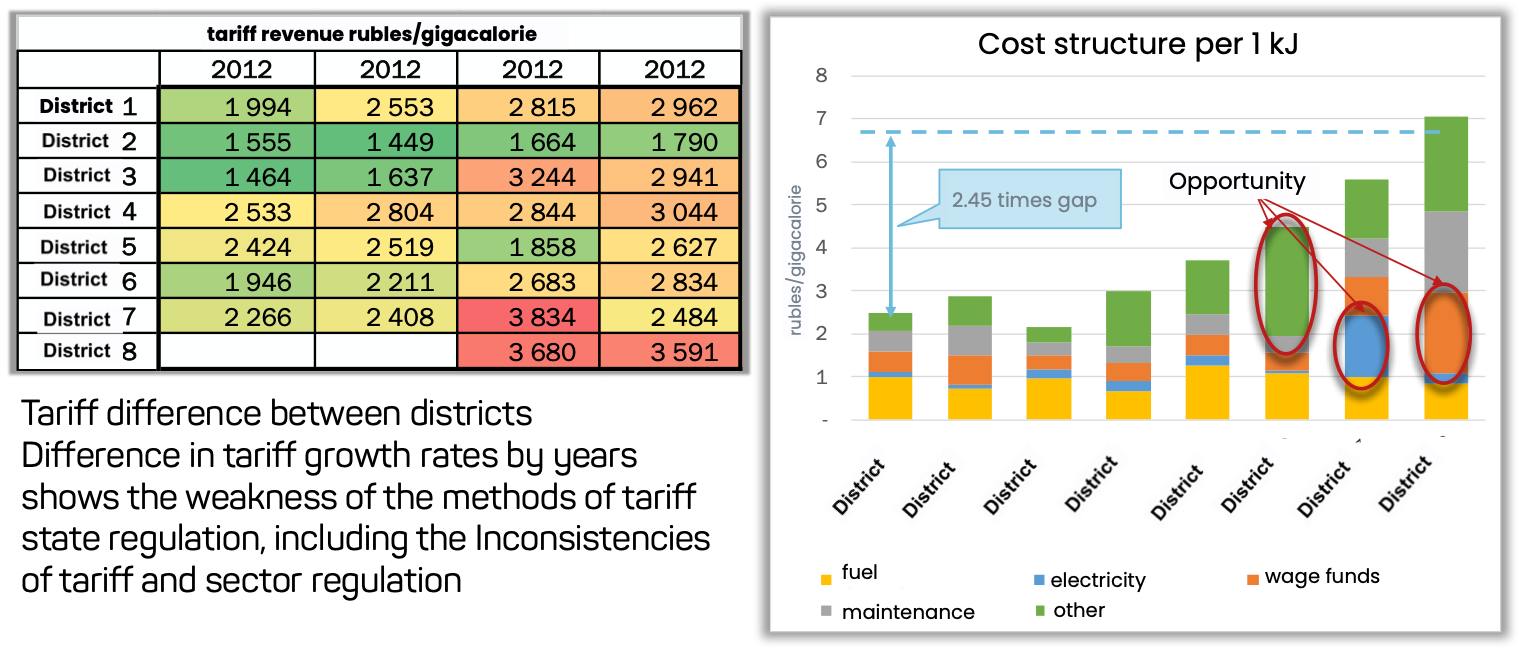
Expenditure for energy resources
As a global result and the result of the above factors, we are facing now:
- a decrease in real incomes among the population
- a decreasing quality of life