9.2 Analysis of regional emissions: a look into the future
In the previous article, we looked at regional greenhouse gas emissions based on actual data for 2020 — it’s interesting to try to look into the future and estimate how much the situation will change in perspective. Let’s take the forecasts of regional fuel and energy balances until 2030 and calculate emissions during this period.
Data sources for forecasting
The model is based on the socio-economic data of the regions. An “inertial scenario” is taken, i.e., the assumption that current trends and technologies are maintained.
1) Data on population, household income, and GRP are taken from Rosstat.
2) Retrospective energy balance tables for Russia as a whole are also taken from Rosstat.
3) Data on the revenue of enterprises and organizations are taken from the balance sheets of the Federal Tax Service.
4) Regional energy balance tables have limitations described in the previous study, in the “Sources and limitations of input data” section.
And we’ll start by looking at the end: compare the top 10 regions by carbon dioxide emissions for 2020 with the top 10 regions in 2030 — for convenience, we’ll copy the graphs with actual data for 2020 from the previous study.
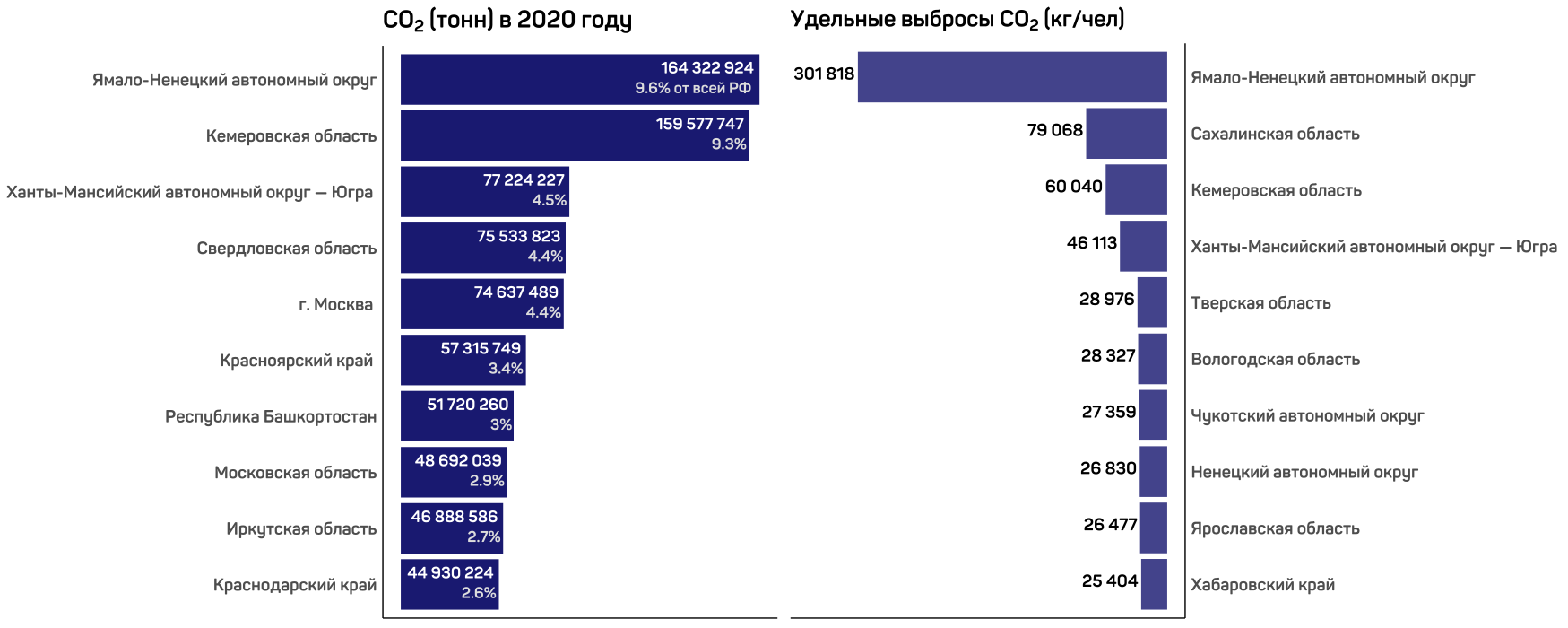
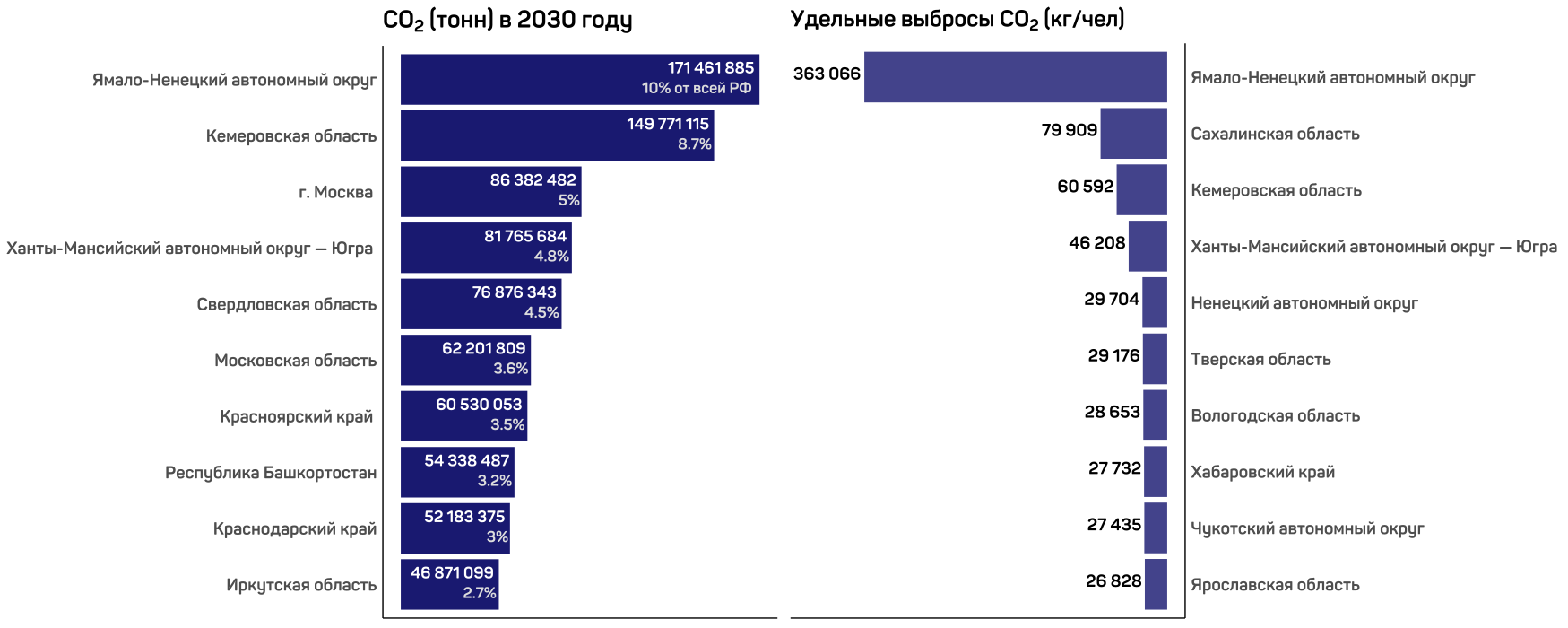
The faces are the same, but the order will change somewhat — the specific emissions are curious: for many regions they change “within the margin of error”, and the “leader” Yamalo-Nenets Autonomous Okrug stands out vividly with a relative increase of as much as 20.3%. This is due to the fact that, according to our forecasts, the extraction (as a consequence, transportation and losses) of gas, which is the main culprit for emissions, will only increase — while the population will fall. Taken together, these processes will give a noticeable change in the specific indicator.
The situation is similar in Khabarovsk Krai: an increase in coal mining and processing coupled with a decrease in population will result in an increase in specific emissions by 9.2%; while a growth of 10.7% in the Nenets Autonomous Okrug will be caused exclusively by a drop in population — gas extraction and use of fuel and energy resources as a whole will only decrease.
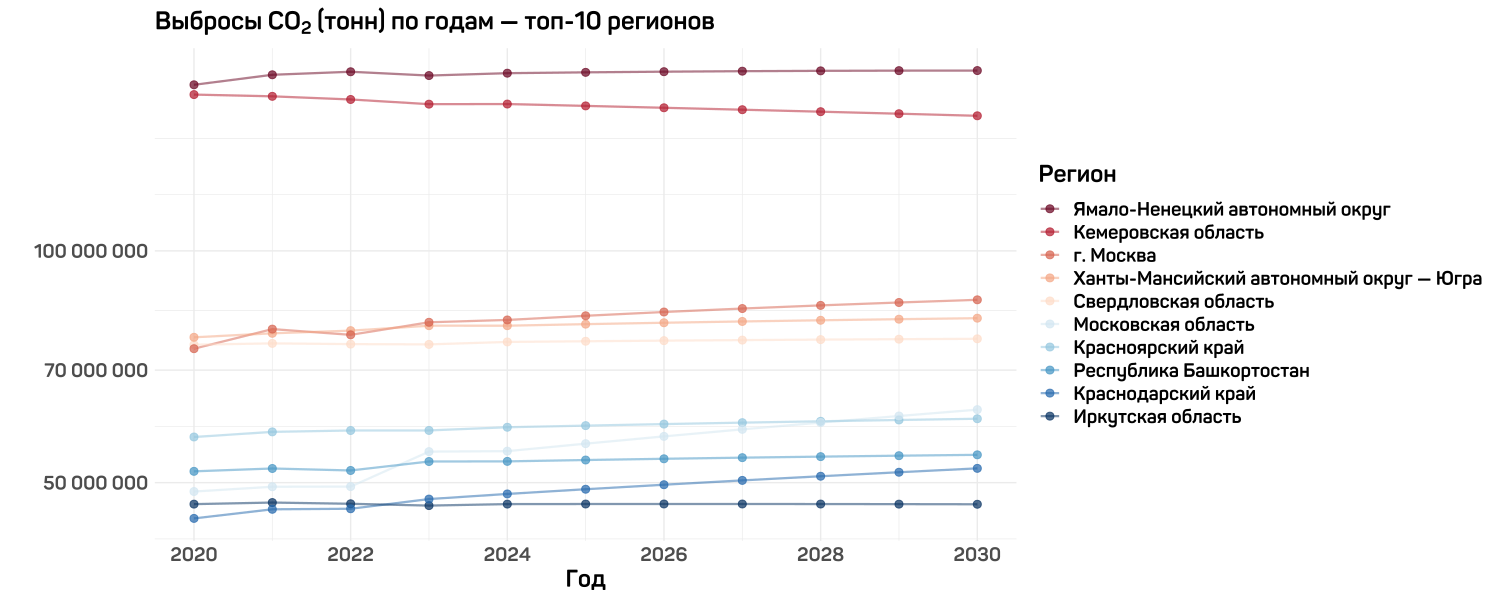
It’s also interesting to look at the absolute values in dynamics — let’s see how our “leaders” will move in the period 2020-2030 (the Y scale, i.e., the emission values, is logarithmic).
Conventionally, the regions can be divided into three groups:
a) Yamalo-Nenets Autonomous Okrug and Kemerovo Region, whose leadership in carbon dioxide emissions is undeniable, 18.7% of all emissions in Russia;
b) Moscow, Khanty-Mansiysk Autonomous Okrug, and Sverdlovsk Region — the second prominent group, giving a total of 14.3% of all emissions;
c) Moscow Region, Krasnoyarsk Krai, Republic of Bashkortostan, Krasnodar Krai, Irkutsk Region — so to speak, the “best of the worst”: the bottom of the list, giving a total of 16% of all emissions; more than the second group, but they share this number among five.
And what’s interesting here is the following. In the second and third groups, Moscow and the Moscow Region, respectively, are gradually breaking into first place and will do so by 2030.
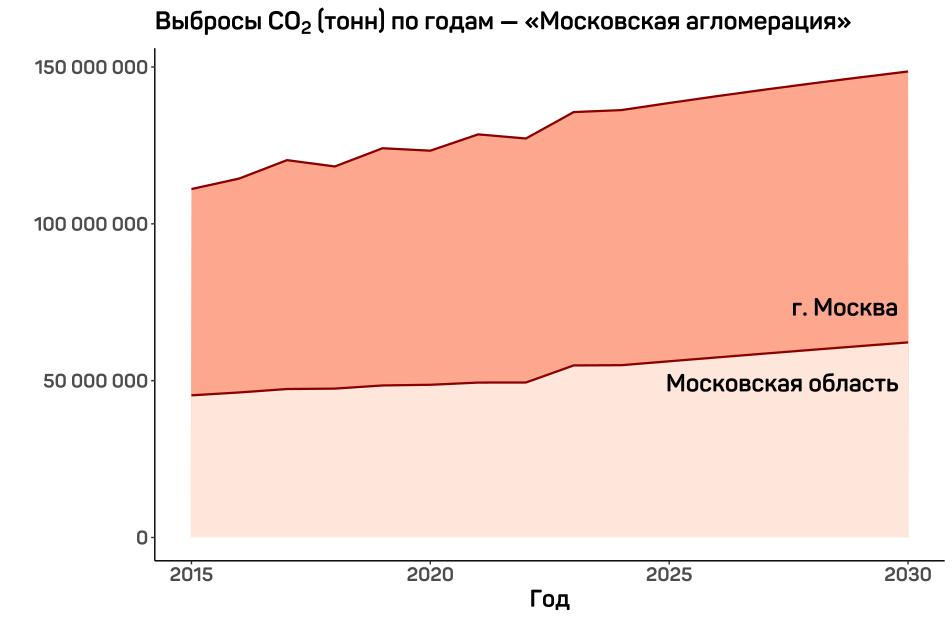
Moscow will grow from 74,637,489 tons to 86,382,482 tons, i.e., by 15.7% — and will take an honorable third place in the “anti-rating”. Moscow Region — from 48,692,039 tons to 62,201,809 tons, by 27.7%.
And in total, the “Moscow agglomeration” in 2030 will give 148,584,291 tons of CO2 emissions, which is almost equal to the value of the second in the “anti-rating” Kemerovo Region.
Let’s move on to methane — we’ll also compare the top 10 regions by emissions for 2020 with the top 10 regions in 2030.
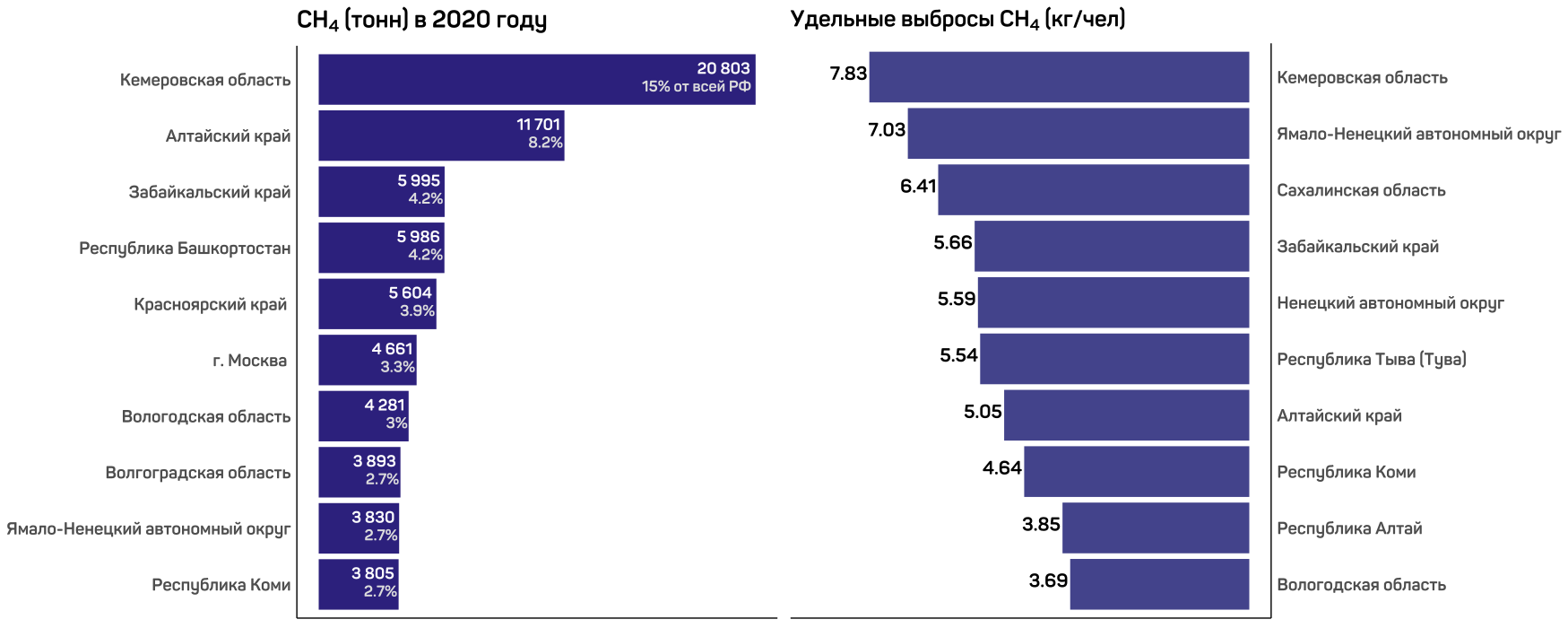
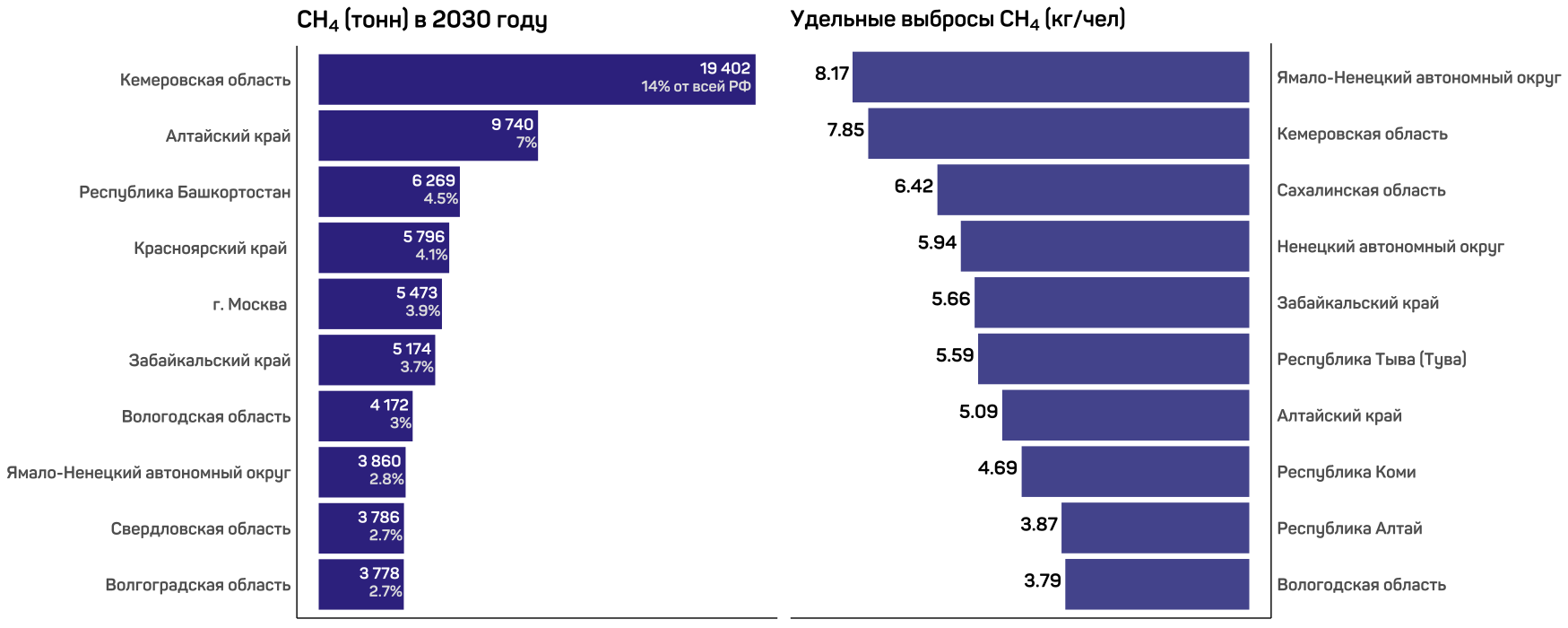
In terms of specific indicators, Yamalo-Nenets Autonomous Okrug will grow by 16.2% and break into first place, overtaking the Kemerovo Region, where the specific value will essentially not change. This is because although coal mining in the Kemerovo Region, according to our forecasts, will grow, exports will increase, not final consumption or use for transformations (i.e., use for generating electricity and heat, coal processing, gas processing, etc.) — the population will fall along with final consumption and transformations, and as a result, the specific value will not change. But in the Yamalo-Nenets Autonomous Okrug, as already mentioned, the story is different: gas extraction, its processing, and combustion during transportation will increase — the population along with final consumption will decrease, but specific emissions will eventually increase.
Let’s look at the dynamics of absolute values over time in the period 2020-2030 (the Y scale, i.e., the emission values, is again logarithmic):
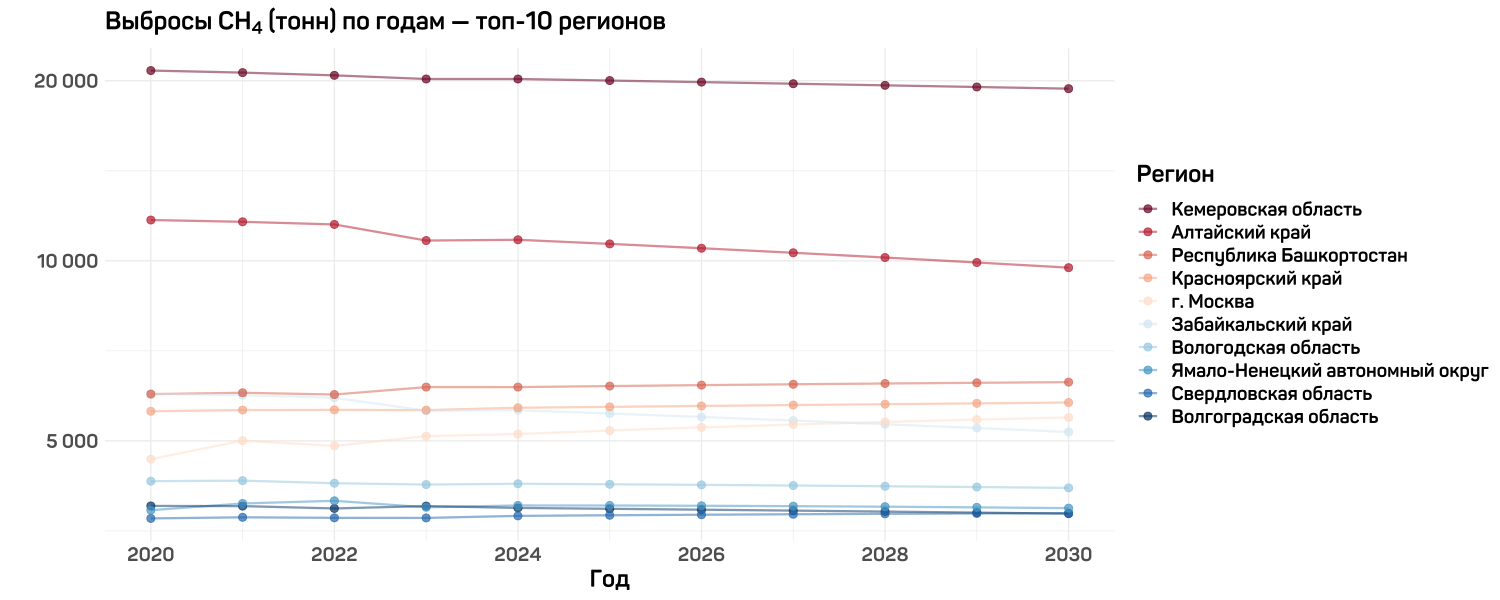
No particularly interesting strong changes are observed: Moscow will grow by 17.4%, Zabaykalsky Krai will reduce methane emissions by 13.7%; Altai Krai will reduce them by 16.8% (primarily due to reduced coal consumption) — and that’s where the noticeable differences end.
The “Moscow agglomeration” in 2030 will collectively give 9501 tons of methane emissions, so if we consider Moscow and the Moscow region together, they take third place in the ranking, slightly behind Altai Krai.
Finally, let’s move on to nitrous oxide — again, we’ll start by comparing the “leaders” in 2020 and 2030.
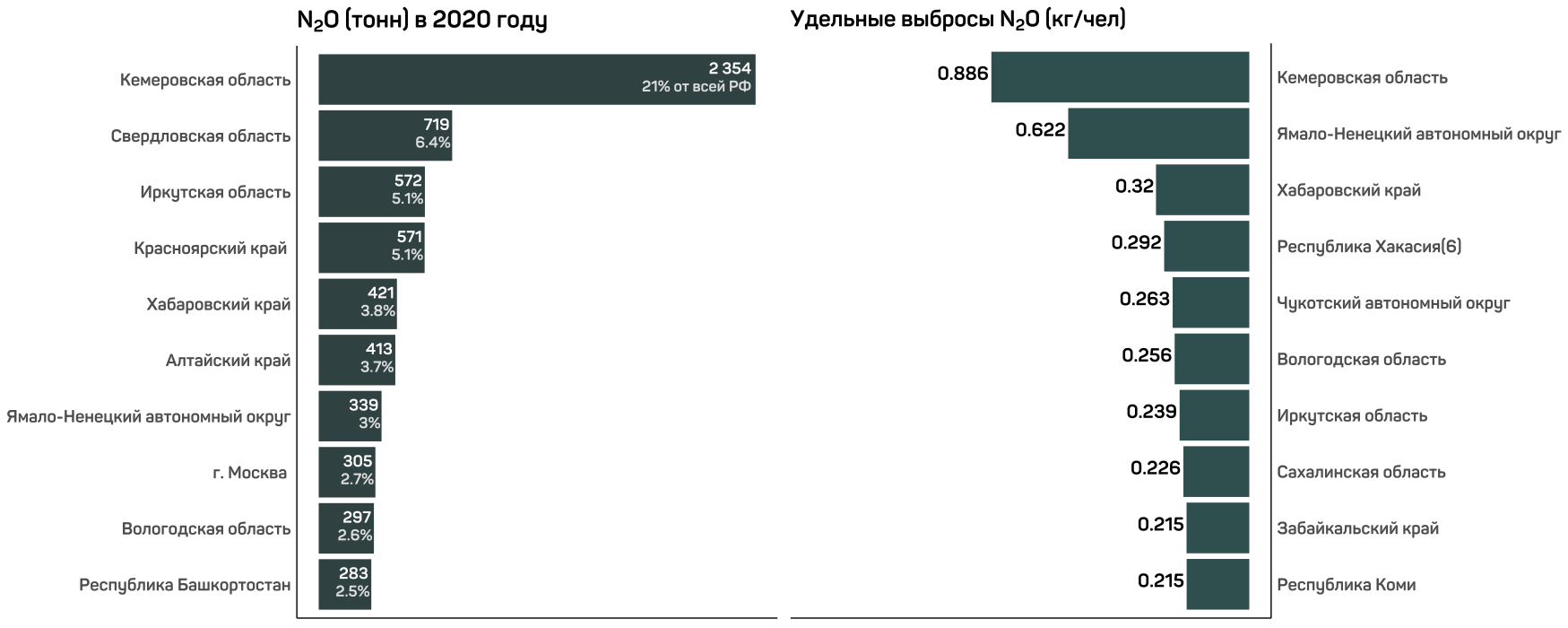
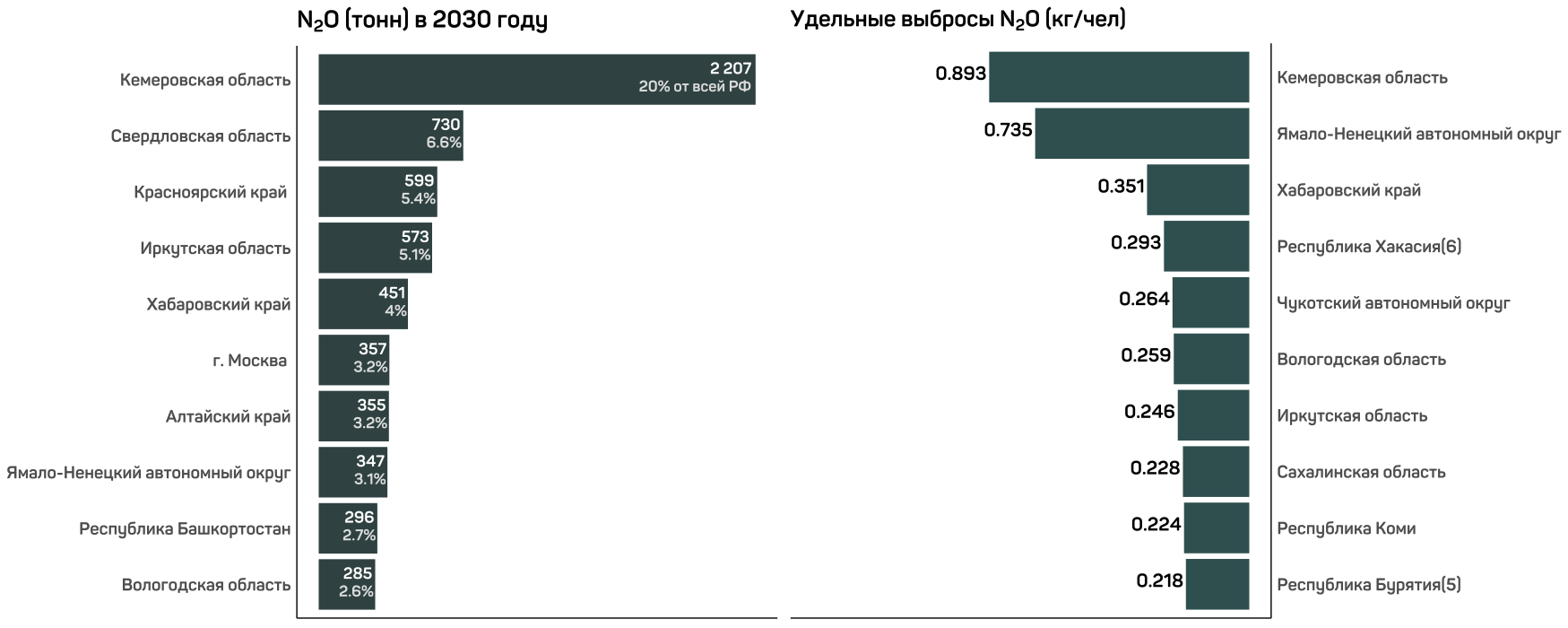
In terms of specific indicators, the picture will practically not change: only the Komi Republic will rise by one place, and Buryatia will take the place of Zabaykalsky Krai. Values will change mainly “within the margin of error” — with the exception of the Yamalo-Nenets Autonomous Okrug with its increase of 18.2% for the reasons already described.
Let’s consider the dynamics of absolute values of nitrous oxide emissions for 2020-2030 (the Y scale, i.e., emission values, is logarithmic):
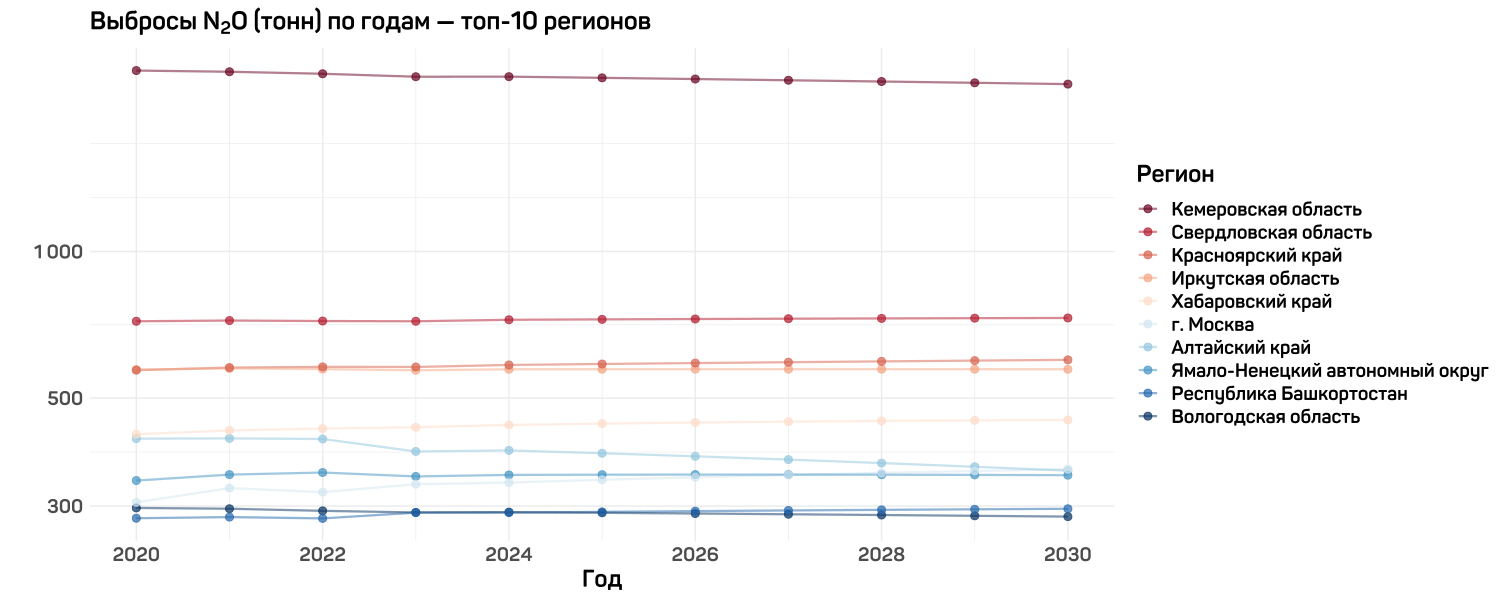
In general, no special changes will occur, but a decrease in emissions by 14% in Altai Krai and an increase by 14.6% in Moscow are noticeable.
The “Moscow agglomeration” will collectively give 577 tons of nitrous oxide emissions, which secures it fourth place.
If current trends persist, by 2030 the Kemerovo Region and Yamalo-Nenets Autonomous Okrug will remain leaders in specific greenhouse gas emissions. The Kemerovo Region will remain in first place (and with a large margin from the rest) also in terms of absolute methane and nitrous oxide emissions — in the case of carbon dioxide, the Yamalo-Nenets Autonomous Okrug and Kemerovo Region will remain in first and second place respectively.
It is worth noting that the absolute values of emissions in the Kemerovo Region for all three gases will decrease, but absolutely not enough to change the lineup of “leaders” — and since the population will decrease at the same time, the specific values will remain practically unchanged. But in the Yamalo-Nenets Autonomous Okrug, the absolute values, on the contrary, will increase, which, coupled with a decrease in population, will lead to a noticeable increase in specific indicators.
Greenhouse gas emissions will increase in Krasnoyarsk Krai and decrease in Altai Krai, but not enough for Altai Krai to stop occupying second place in methane.
Finally, emissions in Moscow will significantly increase: the population will increase, the generation of electrical and thermal energy will increase, the number of cars and total final consumption will increase — due to the high population, neither Moscow nor the Moscow Region appear in the leaders for specific indicators, but together by 2030 they will approach the Kemerovo Region in terms of absolute carbon dioxide values and Altai Krai in terms of methane.